
Coming…
-

Charge: A Count, Not a Kind
Minus Five Marbles You can owe a friend five marbles. You cannot hold minus five of them. Empty your pockets and the smallest number you can end up with is none. Now open any physics textbook. The electron, it says, carries a charge of −1.602 × 10⁻¹⁹ coulombs. Not a debt, not a shortfall against…
-

Current: What Actually Moves Through a Wire
The Lamp That Should Take Hours Flip a switch and the lamp across the room comes on. Not soon after: at once. Now work out how fast the carriers of the current are said to move along the copper. The answer, from any textbook, is a fraction of a millimetre per second. Slower than a…
-

The Configuration of the Atom: What We Have Not Yet Modeled
This page is the open edge of the four universal motions, set out in one place so that the rest of the site can point at it instead of repeating it. Wherever an article on fourmotions.org says that a G2 field holds something, shapes something, or pushes something, it is leaning on what follows. The…
-
The Pinhole Camera: An Image With Nothing Focused
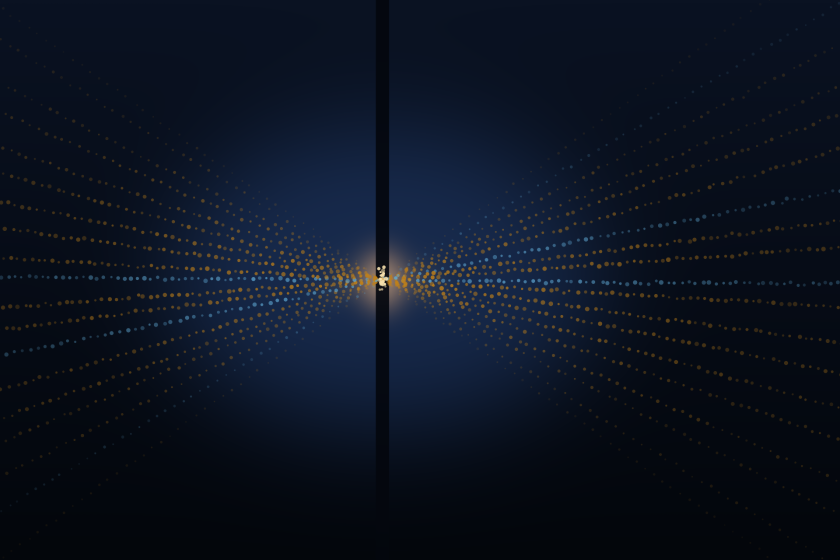
This is the companion to Diffraction. That article attacks the two-slit experiment, which the four universal motions have not yet fully solved. This one takes the same apparatus with one hole instead of two — and here the model is on much firmer ground, which is exactly why it is worth setting side by side.…
-
Diffraction: What Actually Goes Through the Slits
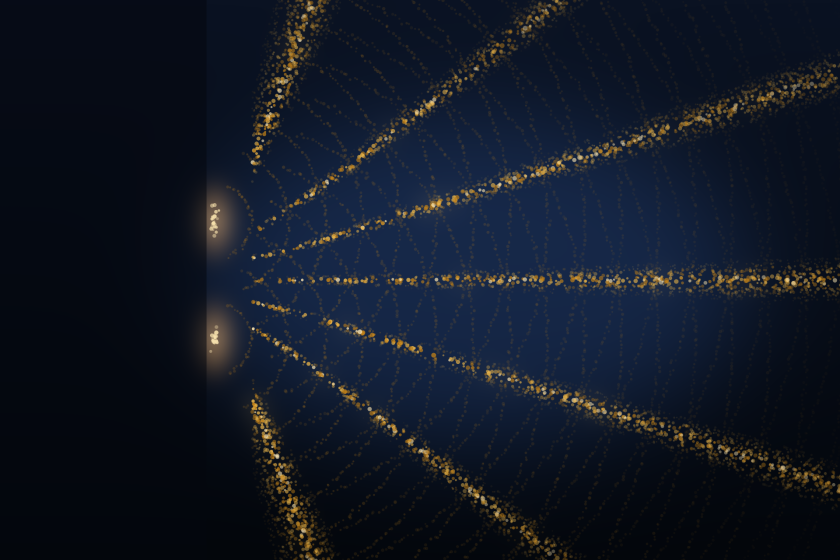
This article is an attempt, not a result. The double slit is one of the places where the four universal motions have not been worked out — Robert and David de Hilster have both taken runs at it and neither is satisfied. What follows is a first pass, built only out of what the model…
-
The Moving Hole: Why an Absence Cannot Carry a Current
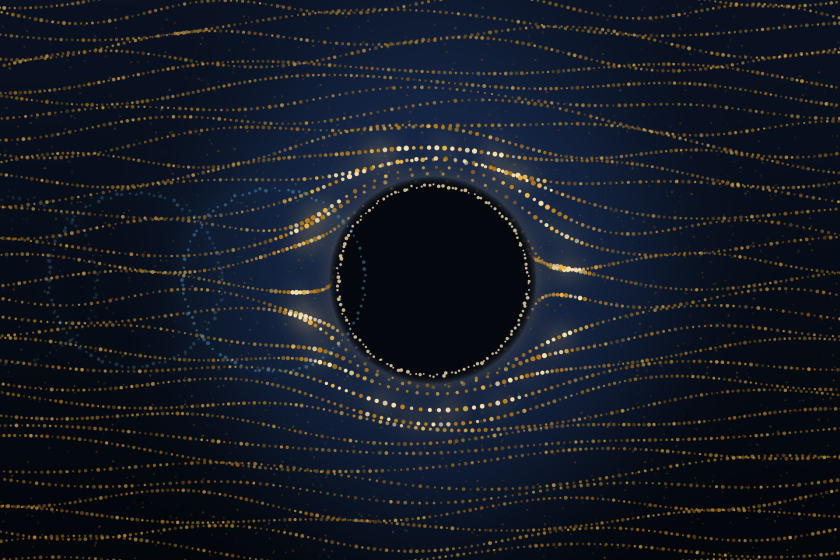
The Parking Lot A row of cars, parked bumper to bumper, with one empty space in the middle. The car to the left of the space pulls forward into it. Now the empty space is where that car used to be. One car moved, to the right. The gap moved, to the left. Keep it…
-

The Electron: A Quanta, Not a Particle
The Drop Is Not the Water A kitchen tap, not quite closed. Drip. Drip. Drip. Every drop is very nearly the same size as the last one. Catch a hundred of them and you will find they vary hardly at all. Now suppose drops were the only way you ever encountered water — no rivers,…
-

How an Atom Emits Light
The Moment Everyone Skips Strike a match. Run a current through a neon tube. Drop a pinch of sodium into a flame and watch it burn orange. Light comes out of atoms constantly, and every textbook explains it in the same two sentences: an electron absorbs energy and jumps to a higher energy level; later…
-

The Impossible Photon: Why One Particle Can Never Be Light
Watch the Bus Go By A bus passes your house at eight in the morning. Just once. It rolls by, turns the corner, and is gone. What is its frequency? The question has no answer, because frequency is not a thing a single passing object can possess. Frequency means how often — how many times…
-
Electromagnetic Waves
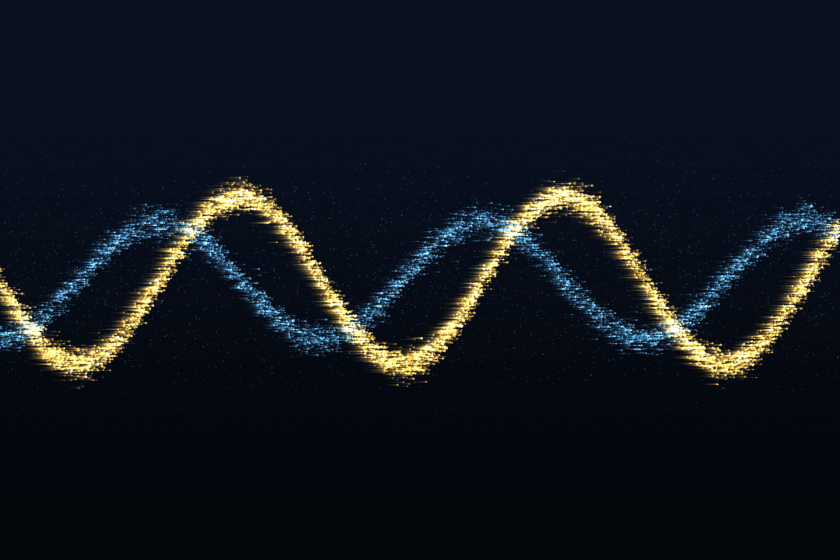
The Picture That Replaced Understanding Every textbook shows it. Two sine waves threading down an axis — one blue, one red — riding perpendicular to each other through empty space. The electric field oscillates up and down, the magnetic field side to side, and together they march off toward the horizon at the speed of…
